The Greenwich Sentinel
Where Motion and Time Become Invitations
By Emma & Elizabeth Barhydt
November 21, 2025
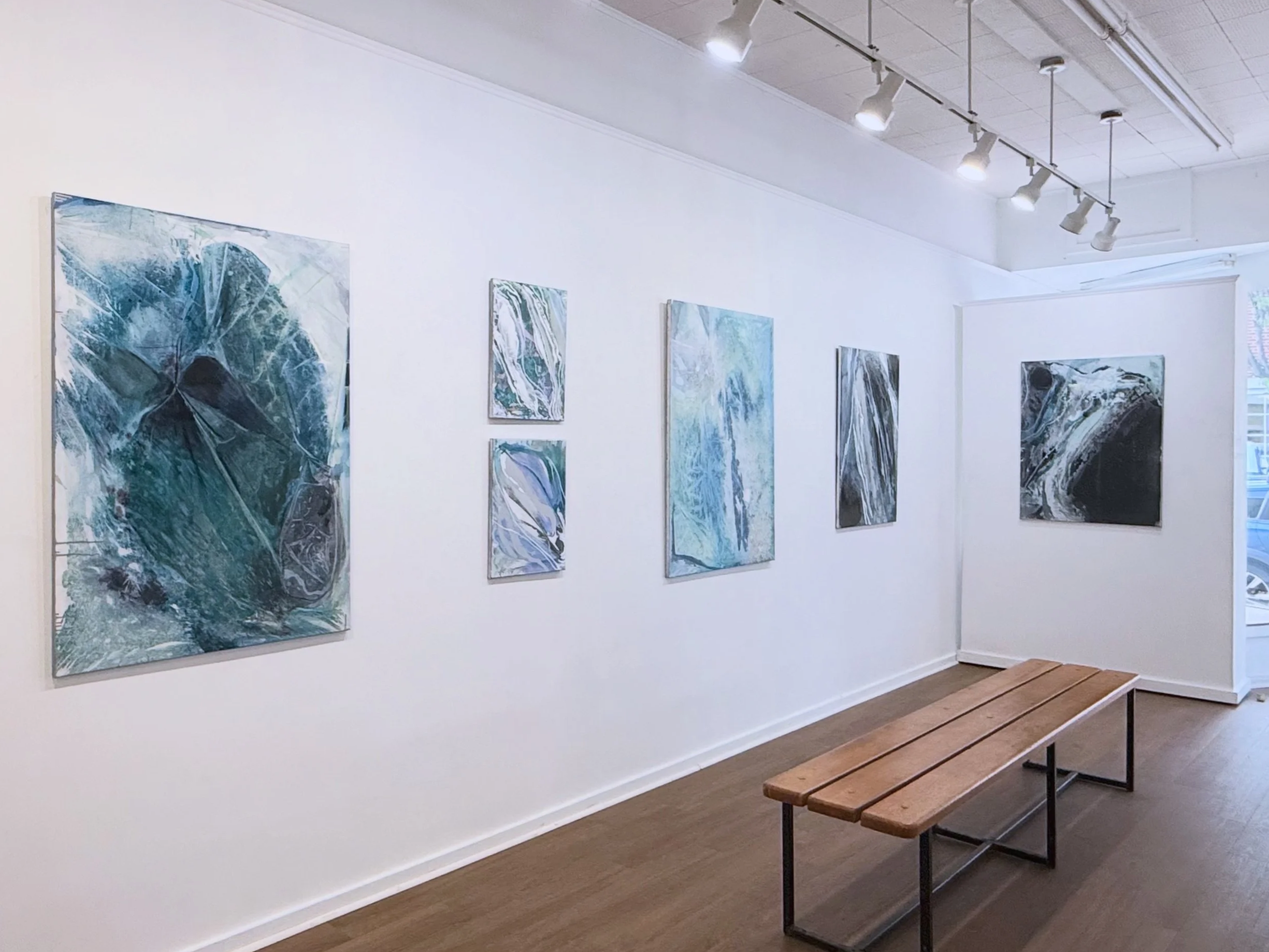
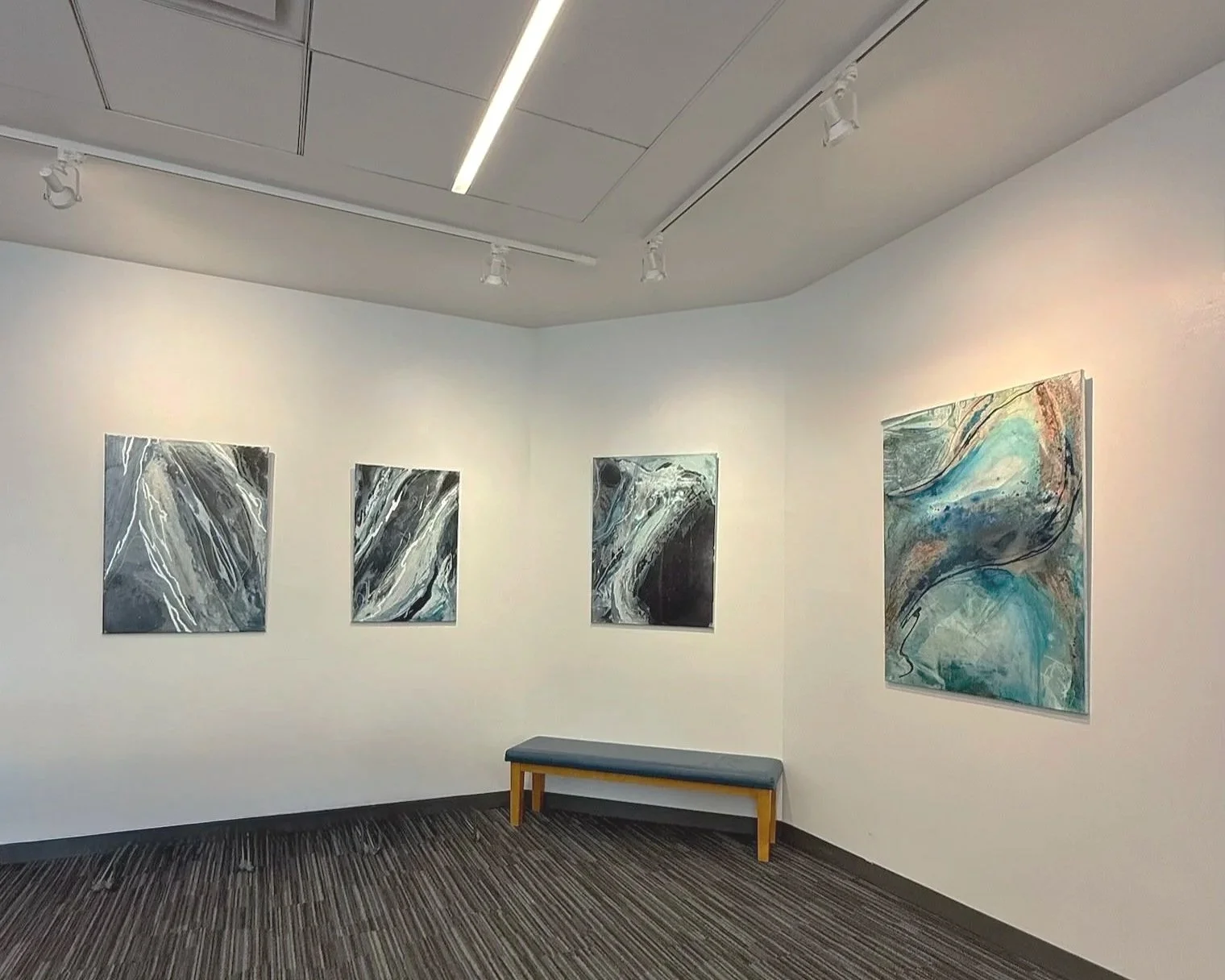
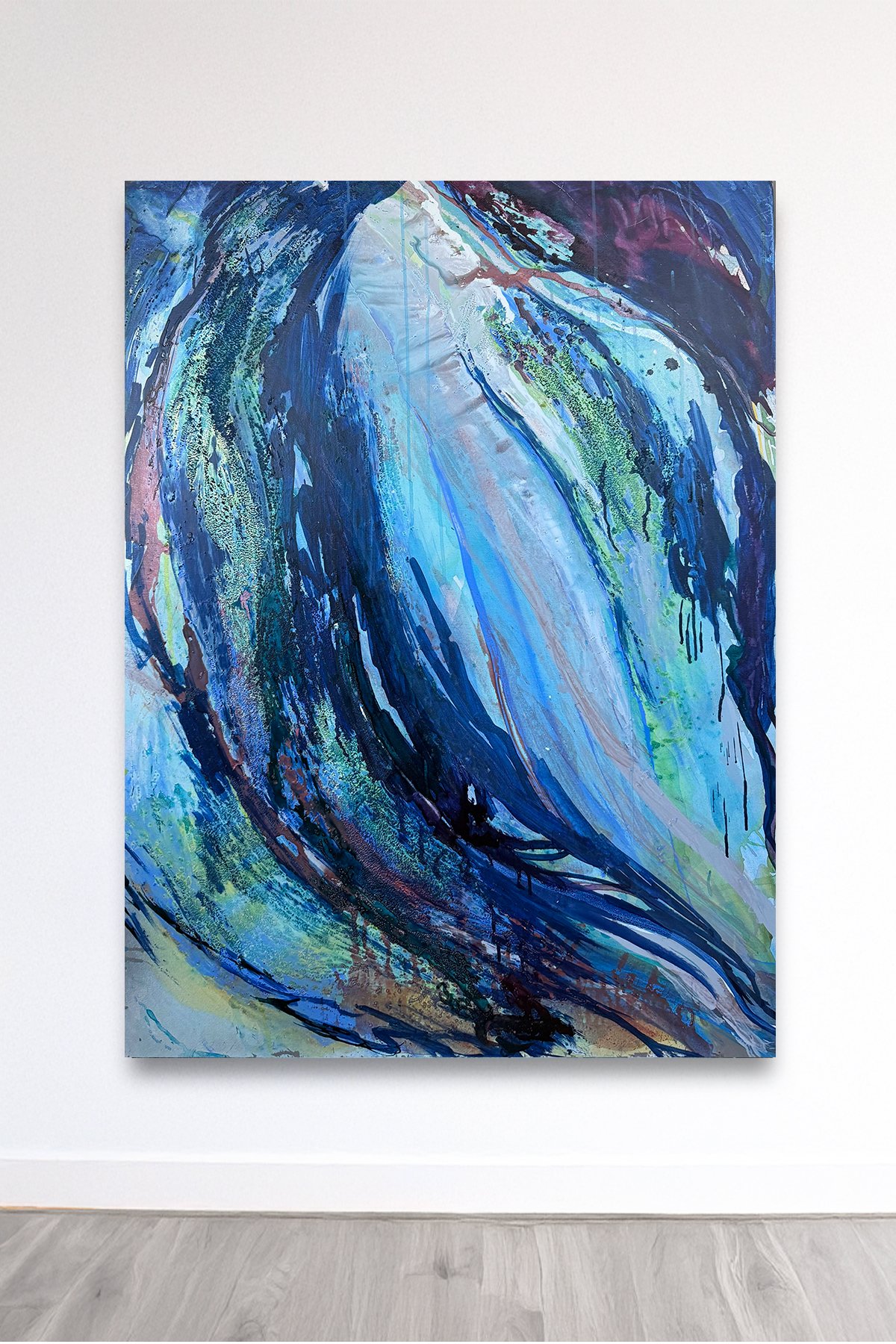
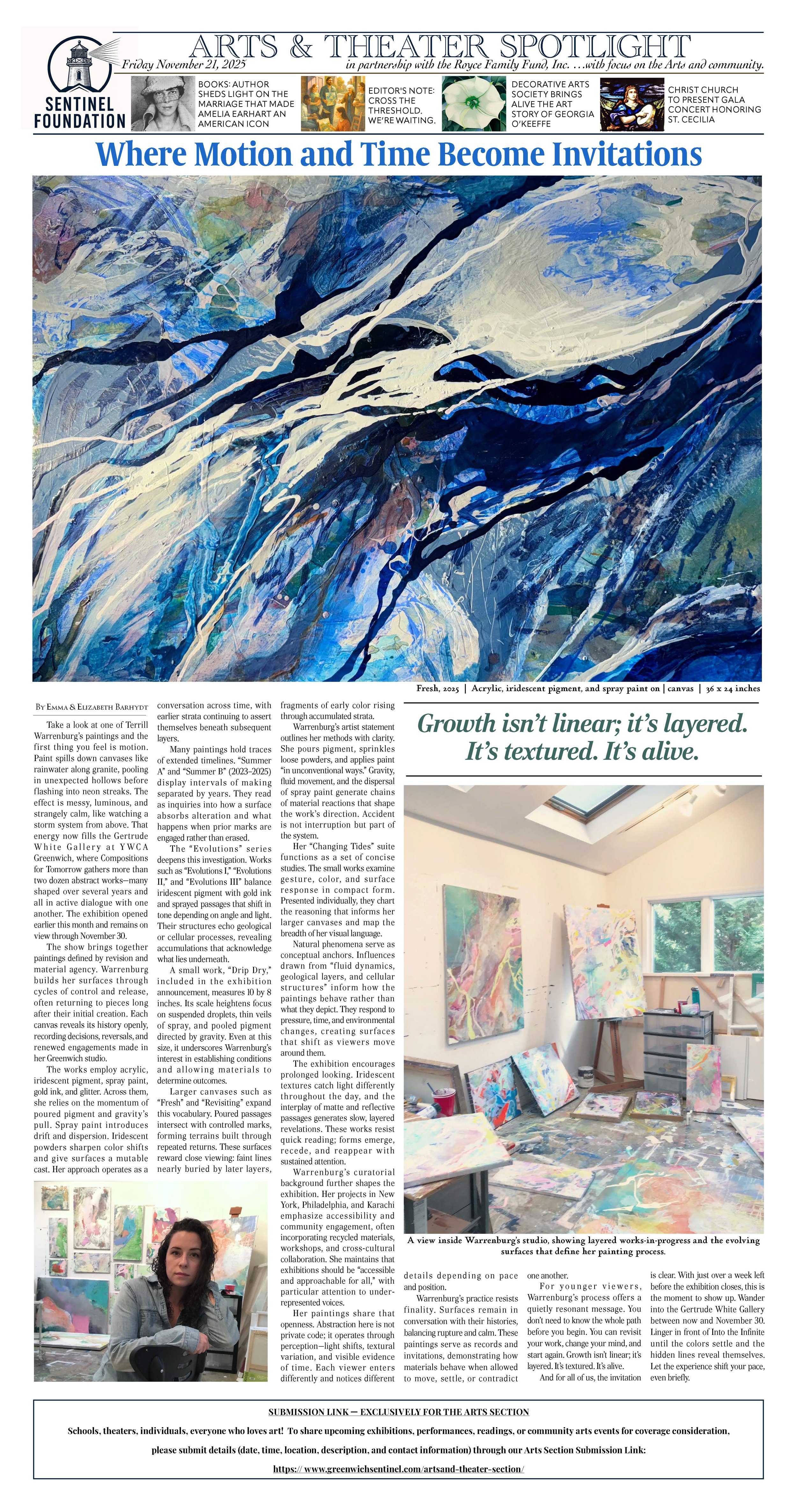
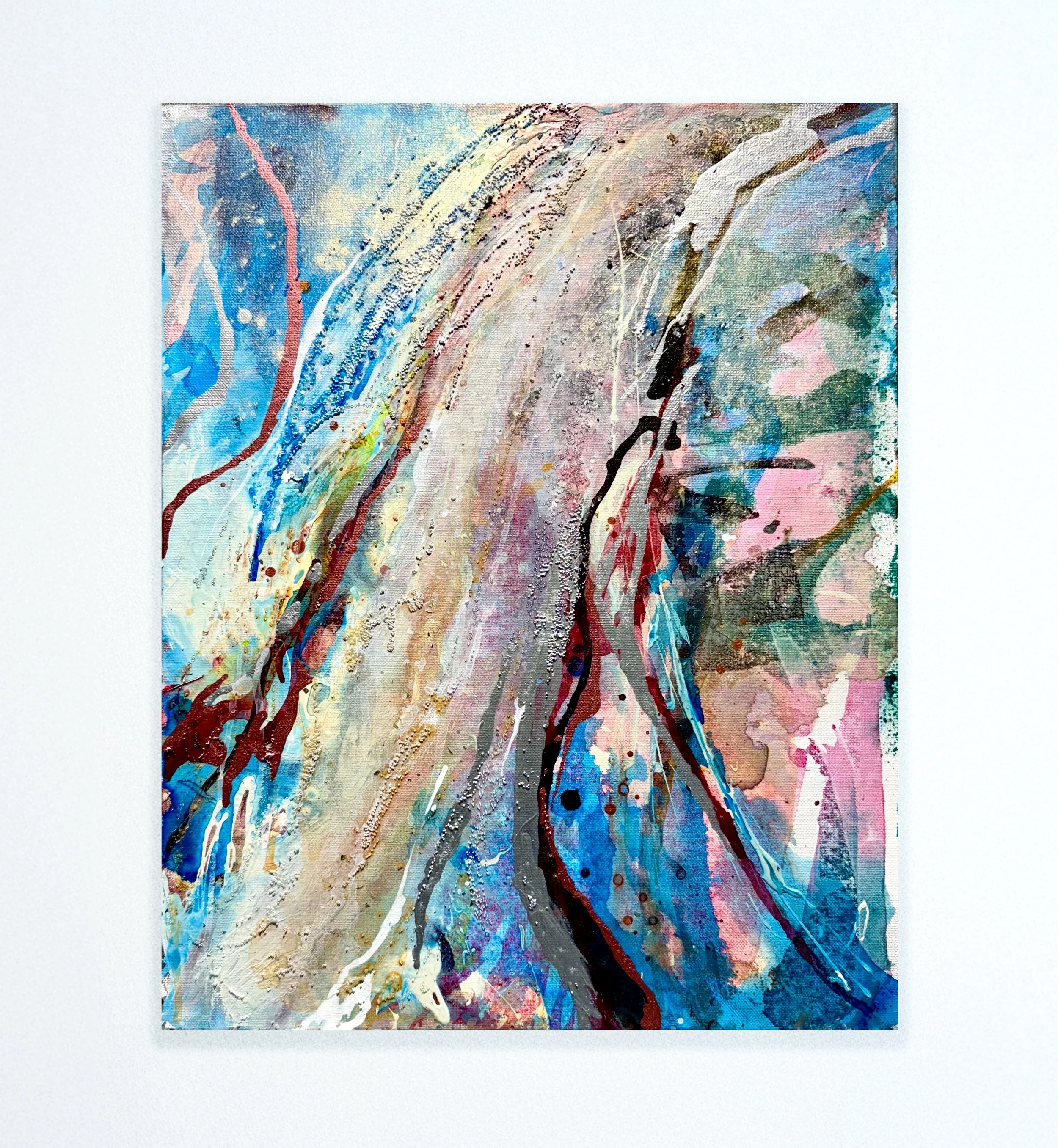
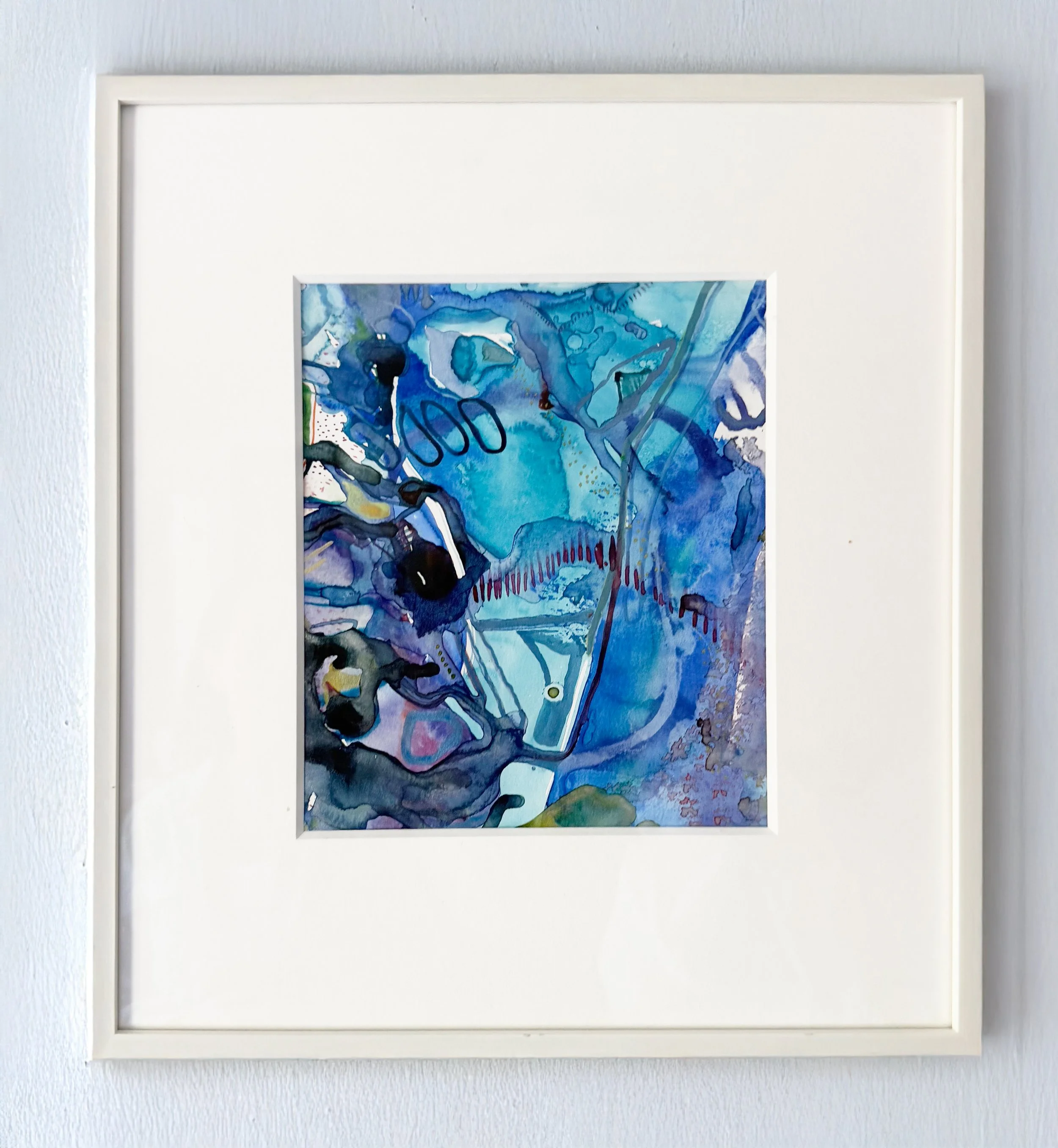
Take a look at one of Terrill Warrenburg’s paintings and the first thing you feel is motion. Paint spills down canvases like rainwater along granite, pooling in unexpected hollows before flashing into neon streaks. The effect is messy, luminous, and strangely calm, like watching a storm system from above. That energy now fills the Gertrude White Gallery at YWCA Greenwich, where Compositions for Tomorrow gathers more than two dozen abstract works—many shaped over several years and all in active dialogue with one another. The exhibition opened earlier this month and remains on view through November 30. The show brings together paintings defined by revision and material agency. Warrenburg builds her surfaces through cycles of control and release, often returning to pieces long after their initial creation. Each canvas reveals its history openly, recording decisions, reversals, and renewed engagements made in her Greenwich studio. The works employ acrylic, iridescent pigment, spray paint, gold ink, and glitter. Across them, she relies on the momentum of poured pigment and gravity’s pull. Spray paint introduces drift and dispersion. Iridescent powders sharpen color shifts and give surfaces a mutable cast. Her approach operates as a conversation across time, with earlier strata continuing to assert themselves beneath subsequent layers. Many paintings hold traces of extended timelines. “Summer A” and “Summer B” (2023–2025) display intervals of making separated by years. They read as inquiries into how a surface absorbs alteration and what happens when prior marks are engaged rather than erased. The “Evolutions” series deepens this investigation. Works such as “Evolutions I,” “Evolutions II,” and “Evolutions III” balance iridescent pigment with gold ink and sprayed passages that shift in tone depending on angle and light. Their structures echo geological or cellular processes, revealing accumulations that acknowledge what lies underneath. A small work, “Drip Dry,” included in the exhibition announcement, measures 10 by 8 inches. Its scale heightens focus on suspended droplets, thin veils of spray, and pooled pigment directed by gravity. Even at this size, it underscores Warrenburg’s interest in establishing conditions and allowing materials to determine outcomes. Larger canvases such as “Fresh” and “Revisiting” expand this vocabulary. Poured passages intersect with controlled marks, forming terrains built through repeated returns. These surfaces reward close viewing: faint lines nearly buried by later layers, fragments of early color rising through accumulated strata. Warrenburg’s artist statement outlines her methods with clarity. She pours pigment, sprinkles loose powders, and applies paint “in unconventional ways.” Gravity, f luid movement, and the dispersal of spray paint generate chains of material reactions that shape the work’s direction. Accident is not interruption but part of the system. Her “Changing Tides” suite functions as a set of concise studies. The small works examine gesture, color, and surface response in compact form. Presented individually, they chart the reasoning that informs her larger canvases and map the breadth of her visual language. Natural phenomena serve as conceptual anchors. Influences drawn from “fluid dynamics, geological layers, and cellular structures” inform how the paintings behave rather than what they depict. They respond to pressure, time, and environmental changes, creating surfaces that shift as viewers move around them. The exhibition encourages prolonged looking. Iridescent textures catch light differently throughout the day, and the interplay of matte and reflective passages generates slow, layered revelations. These works resist quick reading; forms emerge, recede, and reappear with sustained attention. Warrenburg’s curatorial background further shapes the exhibition. Her projects in New York, Philadelphia, and Karachi emphasize accessibility and community engagement, often incorporating recycled materials, workshops, and cross-cultural collaboration. She maintains that exhibitions should be “accessible and approachable for all,” with particular attention to underrepresented voices. Her paintings share that openness. Abstraction here is not private code; it operates through perception—light shifts, textural variation, and visible evidence of time. Each viewer enters differently and notices different Growth isn’t linear; it’s layered. It’s textured. It’s alive. A view inside Warrenburg’s studio, showing layered works-in-progress and the evolving surfaces that define her painting process. details depending on pace and position. Warrenburg’s practice resists finality. Surfaces remain in conversation with their histories, balancing rupture and calm. These paintings serve as records and invitations, demonstrating how materials behave when allowed to move, settle, or contradict one another. For younger viewers, Warrenburg’s process offers a quietly resonant message. You don’t need to know the whole path before you begin. You can revisit your work, change your mind, and start again. Growth isn’t linear; it’s layered. It’s textured. It’s alive. And for all of us, the invitation is clear. With just over a week left before the exhibition closes, this is the moment to show up. Wander into the Gertrude White Gallery between now and November 30. Linger in front of Into the Infinite until the colors settle and the hidden lines reveal themselves. Let the experience shift your pace, even briefly
Read More