
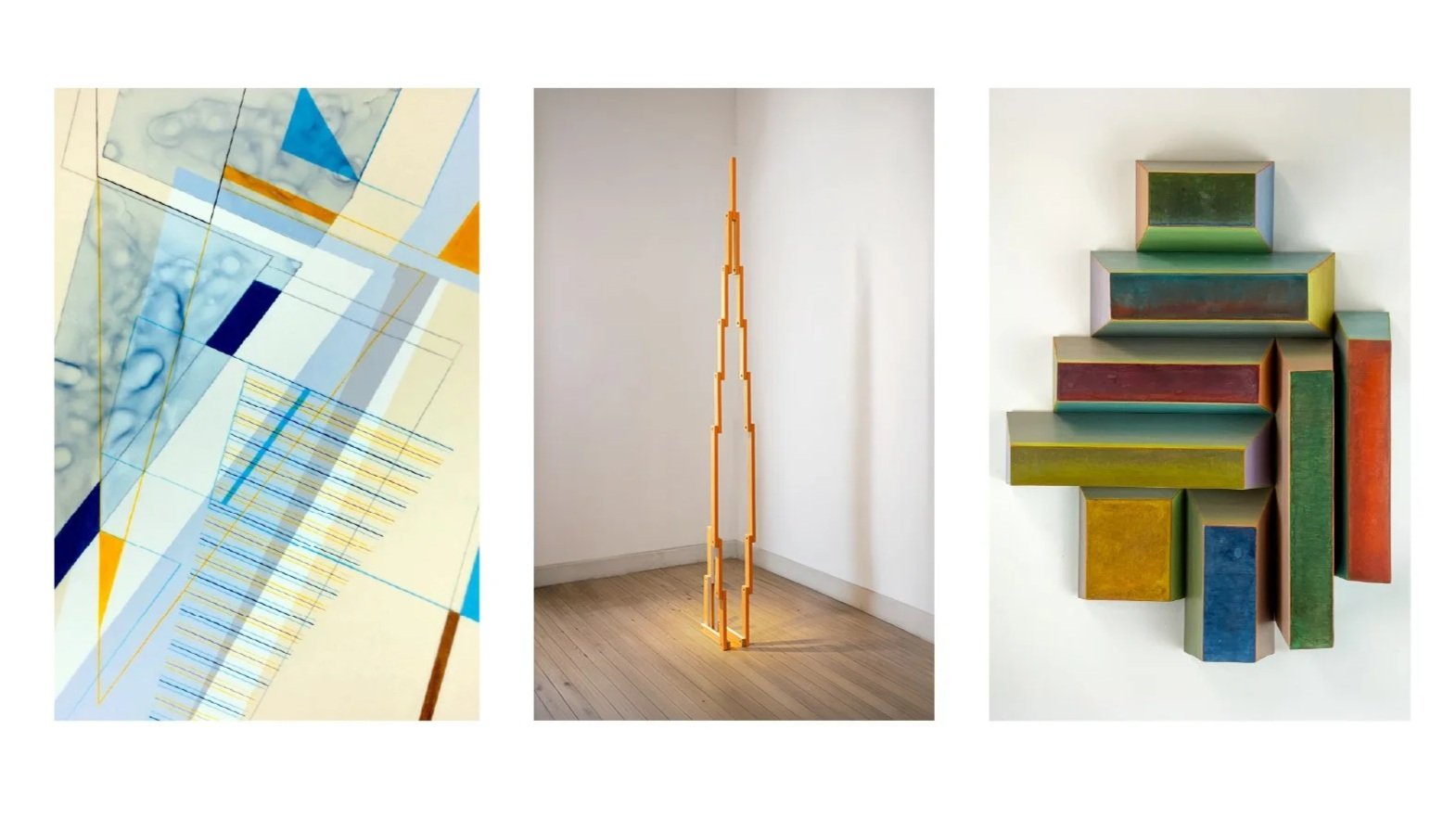
Left to right:
Paul Fabozzi, MoMA #1.2b, 2020, Ink and colored pencil on Mylar mounted archival pigment print, 19 x 13 inches, © Artwork copyright the artist
Reuven Israel, Untitled Folding Object 20A, 2022, PVC on oak and brass hardware, variable dimensions, © Artwork copyright the artist
Meg Hitchcock, Icon No. 14, 2025, Matboard, acrylic, 22 x 16 x 5.5 inches, © Artwork copyright the artist
September 17 - November 3, 2026
Flinn Gallery, Greenwich Library
101 West Putnam Ave., 2nd Fl.
Greenwich, CT 06830
The exhibition ThroughLine examines the line as an elemental graphic device and as a conceptual starting point from which each artist’s work emerges.
The line is the pulse that moves through these works – from point to line, line to plane, plane to form. From the two-dimensional linework of Paul Fabozzi, to the three-dimensional paintings of Meg Hitchcock, to the sculptural rhythms of Reuven Israel, these artists explore the dynamic relationship between surface, form, and space. ThroughLine traces how line can suggest mapping through a place, how perception is constructed, and how line transforms into form. Through this progression, curators Ellen Hawley and Terrill Warrenburg investigate the line not merely as abstracted mark-making, but as a generative force capable of communicating larger ideas.
Public Opening Reception: Thursday, Sept. 17, 6pm-8pm
Artists Talk with Guest Moderator, Liam Otero: Sunday, Oct. 18 at 2 pm
On View: Seven days a week, Sept. 17 through Nov. 3, 2026
The Artist Talk is scheduled for Sunday, October 18, at 2pm. The artists will be in conversation with Liam Otero, Guest Moderator. Liam is the New York Editor of Whitehot Magazine of Contemporary Art, an Art Critic, Curator, and an Art Historian.
Featured Artists:
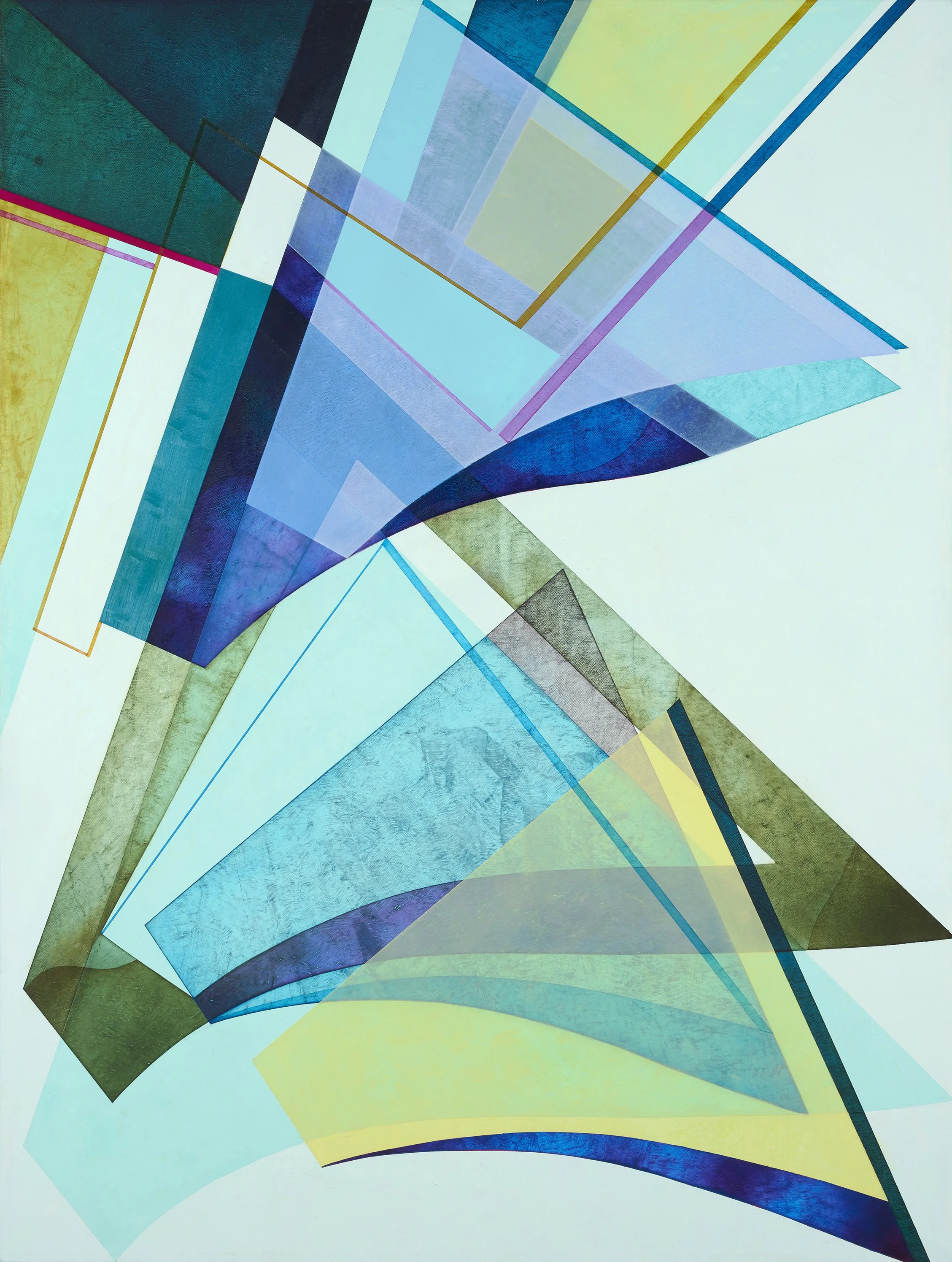
Paul Fabozzi, MoMA #3a, 2023, Oil on canvas, 40 x 30 inches
© Artwork copyright the artist
Paul Fabozzi describes his process as “fueled by episodic experiences of awareness, often inside architectural spaces, or wandering in an urban setting.” These intimate works distill architectural impressions gathered from cities including New York, Rome, Rio de Janeiro, Istanbul, London, and Berlin. Fabozzi translates the mental and physical rhythm of moving through space into abstract visual forms executed in a range of mediums including watercolor, colored pencil, gouache on mylar, paper, and oil on canvas. Ruled lines, shifting scales, and layered translucent planes become visual records of perception, mapping how attention, memory, and movement shape our understanding of space.
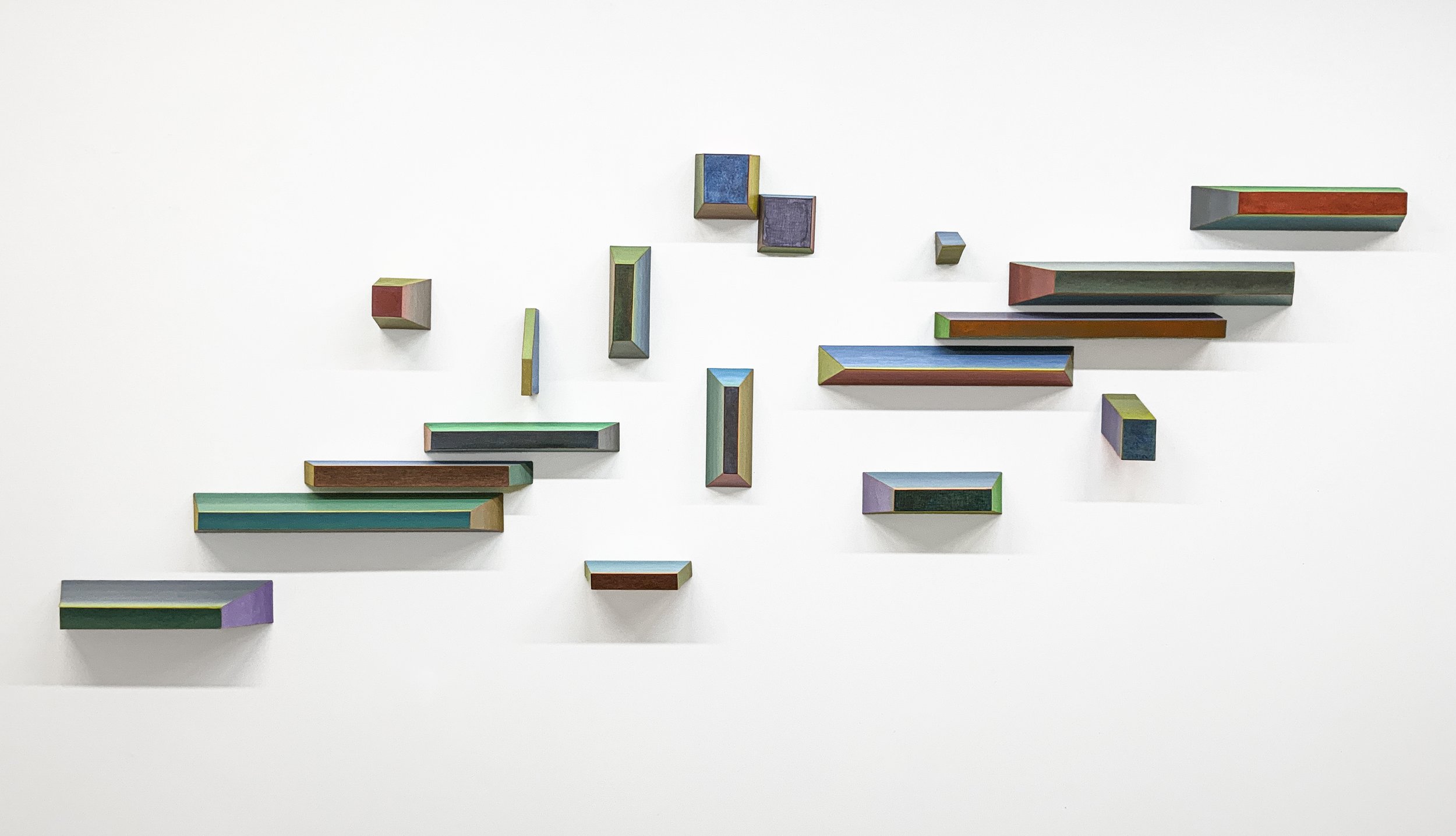
Meg Hitchcock, Shrine No. 1, 2025, matboard structures, acrylic paint, 34 x 96 x 5 inches, © Artwork copyright the artist
Meg Hitchcock's three-dimensional paintings extend geometric forms beyond the picture plane. Using matte board to create sculptural canvases, she blurs the boundary between painting and object. Through inverse perspective, shifting light sources, and carefully constructed shadows, Hitchcock transforms flat surfaces into spatial constructions that challenge fixed viewpoints. As the artist notes, “By disrupting conventional perspective, I want the viewer to become more aware of their own position in relation to the work. The image changes as perception changes.” In her work, the plane takes shape, inviting viewers to become active participants in the act of perception.
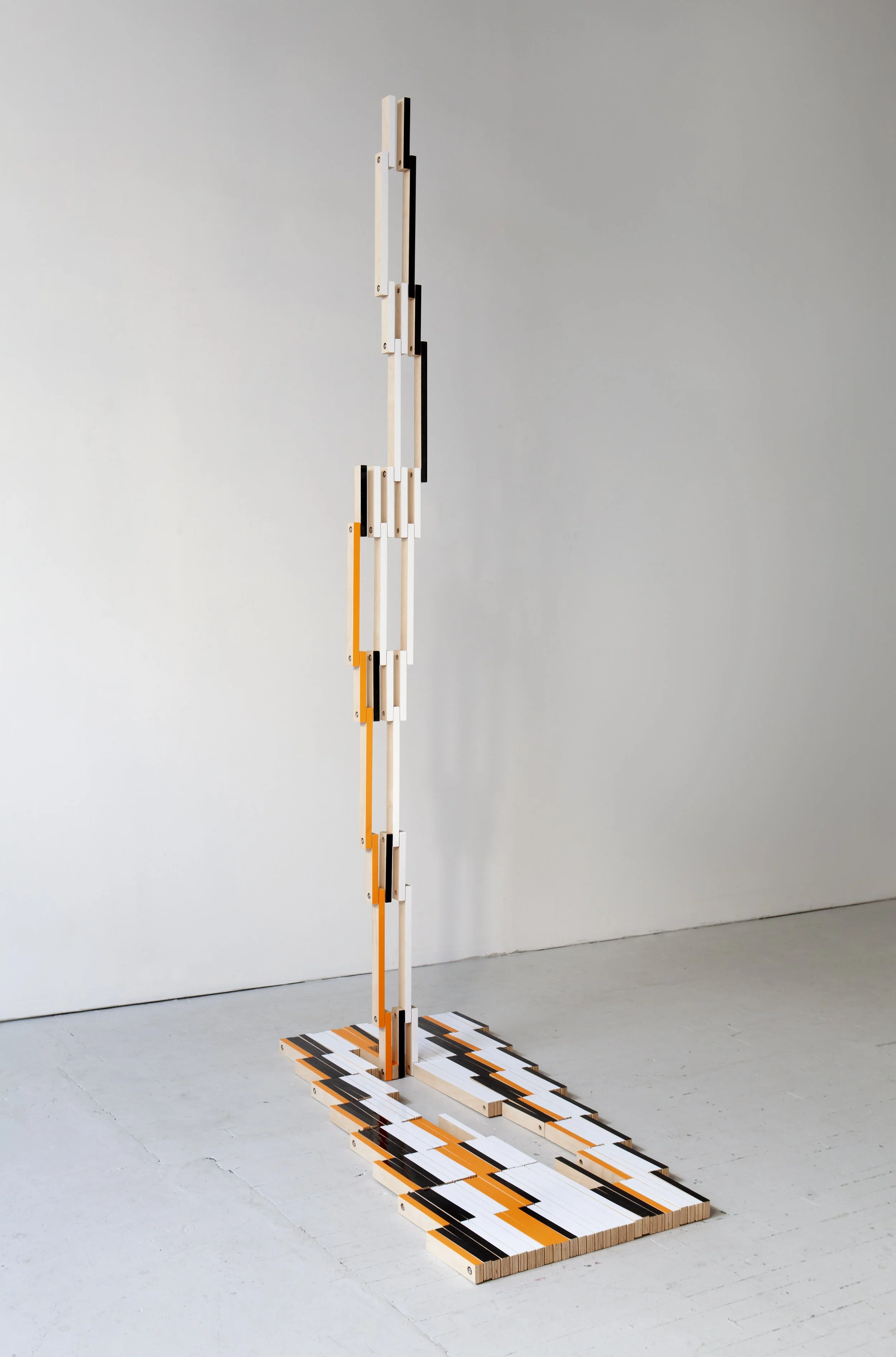
Reuven Israel, Untitled Folding Object 174A, 2022, PVC on Baltic Birch and stainless steel hardware, 100 × 57 × 33 inches
© Artwork copyright the artist, Photo credits: Nuria Rius
Reuven Israel’s sculptural practice bridges art and architecture, drawing from influences from sources that range from religious monuments to science fiction. He explores how materiality can embody belief through structure, tension, form and color. While the sculptures appear industrially fabricated, they combine painstaking manual woodworking that involves laminated different materials, sanding, smoothing, and often coating with industrial paints and lacquers. The result is a kind of visual deception, where wood convincingly transforms into metal or plastic, creating objects that feel simultaneously futuristic, architectural, and ceremonial. At the Flinn Gallery, floor and wall sculptures unfold from compact, planar forms. Some remain spare and linear, while others expand into more elaborate arrangements, revealing the work’s capacity for continual transformation and generating new visual landscapes.
The Flinn Gallery is a nonprofit organization sponsored by Friends of Greenwich Library. All works are for sale. The Gallery welcomes visitors daily, Monday through Saturday, 10 am-5 pm (Thursday until 8pm), and Sunday, 1-5 pm. For more information, additional high-resolution images, or to schedule a group tour or media interview, please contact us at gallerymanager@flinngallery.org.